




State Rep. Conlin Says Data Centers Need Stronger Guardrails and Communities Should Have More Say
May 6, 2026
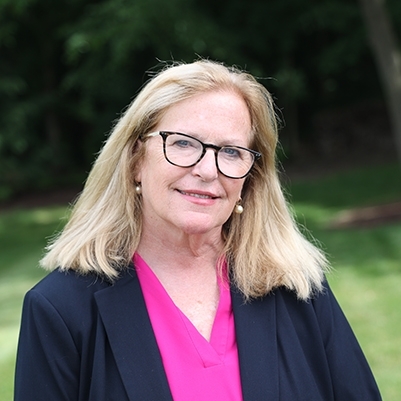
Matthew Hutchison / news@whmi.com
State Rep. Jennifer Conlin says Michigan should pursue technology investment, but believes local communities should have more say over data center projects and stronger guardrails around key issues, including water use, energy demand, land use and transparency.
Conlin, a Democrat running for a third term in the geographically and politically diverse 48th state House District that covers portions of Livingston, Washtenaw and Jackson counties, said she initially voted for legislation providing tax exemptions for data centers, but later voted against final passage in part due to concerns from local residents and environmental groups.
“When we first voted on it (in the state House), we were all like, ‘Oh, yeah, this is great,’” Conlin said, describing the initial proposal as a way to attract technology companies and create jobs. “These new data centers are going to come in, and that’s going to draw in technology companies.”
But Conlin, who spoke extensively about data centers in a WHMI “Meet the People” episode airing this Sunday, said the scale of the proposed developments and the level of local concern became clearer after the initial vote.
“All of a sudden, after we voted, all the environmental groups started popping up,” Conlin said. “And then we realize how our local communities are upset.”
Conlin said the issue became a difficult vote because it put environmental groups, which have been important to her platform, on one side and organized labor, traditionally aligned with Democrats, on the other.
“It’s a tough vote when your environmentalists are saying, please don’t do this, and that’s a core of my platform and what I run on, especially in this district, and then labor is on you, which Democrats traditionally, you know, we support labor, saying, no, no, please vote for this,” Conlin said.
She said she ultimately voted with environmental groups, in part because she was not convinced the projects would generate enough jobs to justify the concerns being raised.
“I did vote with the environmental side, with the idea that there weren’t that many jobs coming through labor,” Conlin said.
Even though Conlin voted against the final legislation, the statewide measure passed, accelerating data center projects around Michigan, including a since-withdrawn proposal in Howell Township, the $16 billion Oracle/OpenAI/Related Digital Stargate project in Saline Township, and Lyon Township’s proposed Project Flex, a roughly 1.8 million-square-foot hyperscale data center.
None of the three projects is in Conlin’s 48th House District.
Conlin also pointed to a late March town hall she held in Howell with Michigan Attorney General Dana Nessel, where the two discussed transparency concerns surrounding data center projects, including redacted contracts, closed-door proceedings and limits on what state officials and the public have been able to review.
“We have to put up some guardrails around these projects,” Conlin said. “I don’t think we can say no data centers. And, you know, back to my original vote, we want innovation in this state. We need that. But we now know there are better ways to do them and worse ways to do them, in terms of how you deal with the water and how you deal with the energy they take and how you deal with the land they’re on.”
Conlin said she believes data centers should not be forced on communities that oppose them.
“I think that we need to have some regulations around it,” Conlin said. “And I think if local communities don’t want them, they shouldn’t have to have them.”
Conlin also addressed the tension between state-level economic development policy and local control. She said Michigan has effectively courted data center development while local communities have raised concerns through home rule and local zoning authority.
“State versus local has been the biggest thing I’ve learned since I’ve been in office, because that is, especially in this district, the biggest kind of challenge,” she said.
Conlin also responded to a proposal by DTE, made less than 24 hours before the interview was taped, offering to pause additional rate hikes for at least two years if the Saline Township data center comes online as planned by the end of 2027.
Conlin said she had not yet reviewed the issue closely, but called the framing unusual. Attorney General Nessel has since called DTE’s proposal “a ransom note.”
“In terms of that actual negotiation of, like, rates won’t go up anymore if we allow them to have more data centers, that feels sort of like a strange bargaining chip to me,” Conlin said. “But I haven’t looked into that more closely yet, and I will now.”
Conlin said she has taken a pledge not to accept campaign contributions from DTE or Consumers Energy, but said that does not mean she will not work with utilities on policy issues.
“I did take the no utility pledge, which is, I don’t take any money from DTE or Consumers,” Conlin said. “But that doesn’t mean I don’t work with them.”
Conlin said the debate over data centers is also tied to broader questions about Michigan’s economic future and whether the state should play a leading role in artificial intelligence.
“That’s not going anywhere,” Conlin said of AI. “We know that it’s sort of like data centers, and they’re tied together.”
Conlin said lawmakers are looking at regulations around AI, but said the technology is moving so quickly that it is difficult to know what those regulations should look like.
“We don’t even really know what it is yet to know how to regulate it,” Conlin said. “That’s what’s so terrifying about AI, is it’s coming in so quickly, and we’re all using it.”
Conlin said the data center issue is an example of the difficult policy choices that can arise in a politically mixed district.
“By then, it was my second time running, so people knew me up there,” Conlin said of Livingston County voters. “They knew me to be someone who listened, someone who — I’m just not radically progressive, either. We are a big tent on the Democratic side. And even though I probably vote mostly with my caucus, I don’t always.”
Conlin pointed to her votes against the data center tax exemption and the cannabis tax as examples of times she broke with many Democrats.
The full interview is available on the WHMI podcast linked below.