




Michigan Hockey Accused of Years of Sexualized Hazing
September 10, 2026
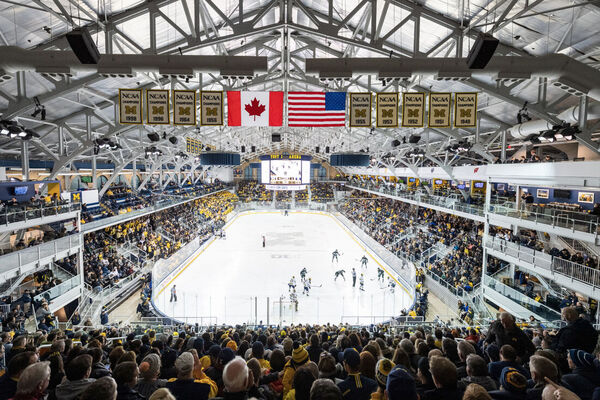
Detroit Free Press / news@whmi.com
According to an exclusive report from the Detroit Free Press, sixteen former University of Michigan hockey players have filed a federal lawsuit accusing the school of allowing years of severe, sexualized hazing inside one of college hockey's most prominent programs.
The lawsuit, filed Wednesday in federal court in Detroit, covers alleged conduct from 1984 through 2001. The plaintiffs are identified only as John Does and accuse older players of subjecting younger teammates to ritualized abuse that included forced nudity, forcible shaving, burning of pubic hair and other sexualized acts.
The University of Michigan and its Board of Regents are the only defendants. Former coaches Red Berenson and Mel Pearson are not named as defendants, but the complaint alleges coaches and staff knew about the conduct, tolerated it and in some cases pressured players to participate.
Michael Pitt, an attorney representing the former players, told the Detroit Free Press that his clients are seeking accountability while protecting their identities.
The allegations go beyond claims that upperclassmen acted without supervision.
According to the complaint, players who resisted or complained were allegedly told they were not being good teammates or were challenged to "be a Michigan man." The lawsuit further alleges that participation became understood by younger players as a condition of remaining accepted within the program.
Some plaintiffs claim their playing time was reduced after objecting.
That distinction will be central to the case. Hazing carried out secretly by players presents one set of questions. The plaintiffs are alleging something considerably broader: that adults responsible for the program knew what was occurring and helped create an environment in which players believed refusing could carry consequences.
The complaint specifically alleges that practices continued during Berenson's tenure and also references Pearson, who later became Michigan's head coach.
None of those allegations has been proven in court.
One piece of Michigan hockey history takes on new relevance because of the lawsuit.
More than a decade after the period covered by the plaintiffs' allegations, Berenson publicly announced in 2012 that Michigan was eliminating freshman hazing from the program.
"We've taken all of the little freshmen things out of our program," Berenson said at the time. "It's hard enough to make the transition as a freshman without going through some of that. It's borderline embarrassment or humiliation."
The practices Berenson discussed publicly in 2012 were far less severe than those described in Wednesday's lawsuit. The reported freshman duties included carrying pucks, loading buses and going last through meal lines.
His comments do not establish what coaches knew about the conduct now alleged by the former players. They do establish that freshman hazing had long been recognized as part of the program's culture before Berenson formally ended what he publicly described.
The timing creates another institutional problem for Michigan.
The athletic department is already undergoing leadership changes following an outside review and Warde Manuel's decision to leave the athletic director position at the end of 2026. The transition has included questions surrounding Manuel's departure agreement and the university's explanation of the athletics department review.
Michigan hockey has faced its own scrutiny before. Pearson was removed as head coach in 2022 following an investigation into the program's culture and other allegations of misconduct. The current lawsuit concerns a much earlier period and makes separate allegations, but it puts institutional oversight of the hockey program back under examination.
It also arrives after Michigan agreed in 2022 to a $490 million settlement with more than 1,000 people who accused former university physician Robert Anderson of sexual abuse.
The 16 plaintiffs are seeking an unspecified amount of monetary damages.
They are also asking the university to require sexualized-hazing prevention training for Michigan athletes, making the lawsuit about more than financial compensation.
Pitt said the university had known for more than a year that litigation was possible but had not reached a resolution with the former players.
The university, Board of Regents and hockey program had not provided the Free Press with a response to the allegations at the time the original report was published.
For Michigan, the next stage will move beyond describing what allegedly happened decades ago. The case will test whether the plaintiffs can establish their broader claim that the culture was known, protected and reinforced by people responsible for stopping it.
Photo courtesy of University of Michigan.