




MI-7 Candidate Maasdam Says Michigan Should Compete For AI Data Centers, But Protect Local Communities
June 17, 2026
MI-7 Candidate Maasdam Says Michigan Should Compete For AI Data Centers, But Protect Local Communities
By Matthew Hutchison / news@whmi.com
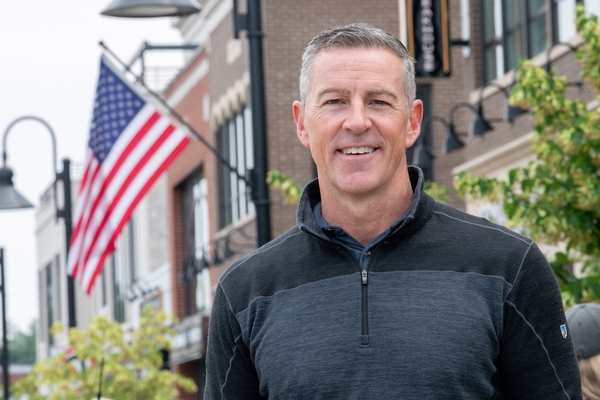
Matt Maasdam says Michigan should compete for data centers and the economic opportunities tied to artificial intelligence, but says local communities need more information and more protection for ratepayers before massive projects move forward.
Maasdam, a Democrat running for Congress in Michigan’s 7th Congressional District, made the comments during a wide-ranging interview on WHMI’s “Meet the People” public affairs program. The 7th district includes Livingston County, where Howell Township trustees in late November enacted a six-month moratorium on data centers following strong public reaction to a proposed site on the Van Gilder family farm.
Maasdam, a former Navy SEAL and former military aide to President Barack Obama, said AI and data centers will help shape the future of Michigan’s economy, and stressed the need for the country to win the AI race with China.
“AI is coming,” Maasdam said. “If we don’t participate in these in the way that it’s coming, all those opportunities will go to other states. They’ll go to Indiana, and they’ll go to Ohio, and we will not have a say in how to guide and lead the AI future revolution. And I want to make sure that Michigan is participating there.”
But Maasdam stopped short of giving developers a blank check. He said data centers should be handled as a local issue, with communities given enough information and resources to determine whether a project is right for them.
“I want to make sure the local groups have all the information and kind of firepower they need to do this in a way that is best for them,” the Brighton area resident said. “That said, I definitely think that as data centers pop up that we should be trying to get them done in a reasonable fashion. We should look at it from the rate payer perspective. I don't want to see them draw huge amounts of energy and everybody’s rates go up and everybody pay more for electricity because a data center came into their space.”
His position comes as Michigan remains a focal point in the national debate over AI infrastructure. Governor Gretchen Whitmer recently appeared with OpenAI CEO Sam Altman and other business leaders at a Saline Township groundbreaking for a major data center project. At the same time, lawmakers in Lansing have introduced legislation that would place a temporary moratorium on new data center developments while the state studies their impact on communities, utilities and the environment.
Maasdam said he believes there may be ways for data centers to help lower costs for consumers and reinvest in the electric grid, but said communities need to see those benefits clearly before projects are approved. He also said environmental concerns must be addressed, including water, noise and property values.
“I also want to see from an environmental perspective, making sure that it is at least neutral to the environment, if not better to the environment,” Maasdam said. “I don’t want to see water get tainted or it be super noisy and drive people crazy because it’s there. We have to do this (and) I want to see this done in the right way if it’s going to happen.”
Maasdam also raised concerns about the imbalance between small local governments and major technology companies.
“These billion, you know, trillion-ish dollar companies are coming in with lawyers and NDAs, and saying, ‘Don’t disclose who we are, we’re doing this thing,’” Maasdam said. “I want to see transparency, and I want to see the local authorities have the resources to balance and work with a company of that size and power.”
He said a small township should have the authority to push back when necessary.
“If it’s a little teeny tiny township, and you’ve got this trillion-dollar company coming in and pushing them, I want them to feel like they have the legal standing and the authority to say, no, this is how we want to do it,” Maasdam said.
During the interview, Maasdam also discussed Iran, war powers, health care, inflation, tariffs and his effort to position himself in the Democratic primary.
The interview was taped June 11, after the U.S. struck Iran two nights in a row and before the United States and Iran agreed to a Memorandum of Understanding aimed at halting the war. Maasdam, a former Navy SEAL and 20-year Navy veteran, said Iran is a bad actor and that limited strikes on nuclear facilities may be appropriate in some circumstances. But he said President Trump had not made the case for an extended military campaign.
“I do not want to be in another forever war,” Maasdam said. “I spent my time in Baghdad, in Erbil, in Kabul, and I watched America rebuild their roads. I want to see us rebuilding our roads and not spending our money on dropping bombs and killing people and fixing the holes that we make in the ground. I want to see us spending it on healthcare and education and things in the United States, rather than things overseas.”
Maasdam said he does not believe Trump has the legal and constitutional authority to continue military action without Congress after 60 days.
He also criticized Congressman Tom Barrett, the Republican incumbent in the 7th District, over Iran. Barrett, also a veteran, has introduced legislation that would authorize military operations in Iran for a defined 90-day mission while barring ground troops, nation-building, occupation or seizing territory.
Maasdam said Barrett had previously voted to give Trump a “full open check” overseas before introducing legislation later.
Maasdam also used the interview to describe himself as a moderate Democrat. Asked how he would characterize his politics, Maasdam said he is “left to center” but “very moderate,” and said he is fiscally responsible.
On health care, Maasdam said he supports a public option but does not support Medicare for All.
“I don’t want to see a Medicare for All,” Maasdam said. “I don’t think going to a single-payer system at this point in time is the right thing to do. I think that’s too big of a leap, and I think working within the system that we have and creating a public option that isn't profit-based and puts competition into the marketplace is the way to go.”
Maasdam is running in the Democratic primary against former U.S. Ambassador to Ukraine Bridget Brink and community organizer William Lawrence. The winner will face Barrett in the general election.
Maasdam said his pitch to independent and Republican-leaning voters is that he would represent the whole district, not only those who vote for him.
“I care about you. I’m going to listen to you,” Maasdam said. “I’m here to listen to everybody in this district and represent them.”
The full “Meet the People” interview with Matt Maasdam will air at 6 a.m. ET on Sunday and can be heard any time on demand at the podcast page at WHMI.com.