




Livingston Co. Veteran Services Director Refutes Nakagiri's Claims of Transparency Over Millage Request
March 13, 2026
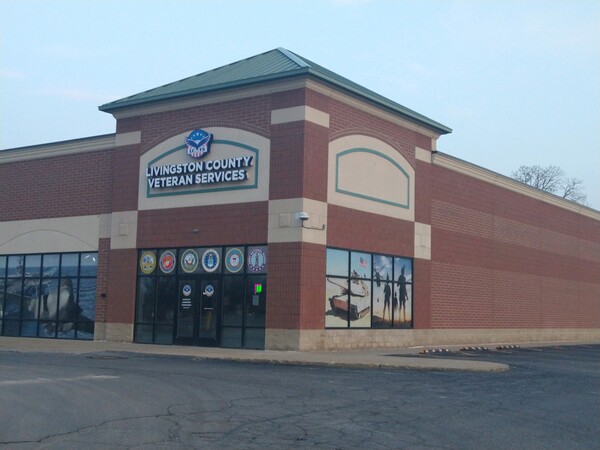
Nik Rajkovic / news@whmi.com
The following letter is from Livingston County Veteran Services Director Ramon Baca, in response to Commissioner Wes Nakagiri on the Veterans Services Millage request scheduled to be voted on by the full county board March 23:
To the Editor,
The recent letter written by Wes Nakagiri the Chairman of the Finance and Asset Management Committee (FAM) regarding the Veteran Services millage contains several mischaracterizations that require correction. While Mr. Nakagiri attempts to frame his actions as transparent, procedurally sound, and aligned with the interests of Livingston County veterans, the public deserves the full context.
First, the assertion that concerns over process are “without merit” ignores the core issue: transparency is not simply posting an agenda online. Transparency requires genuine collaboration, good faith engagement, and respect for established departmental practices. Drafting a replacement resolution without the support of Veterans Services leadership—and then inserting it into the committee agenda as a unilateral alternative—undermined the spirit of partnership that has historically guided this program.
To be clear, Mr. Nakagiri met with Veterans Services leadership only after we specifically requested a meeting due to his lack of transparency with the rest of the commissioners. He stated that he would leave our request off the FAM agenda unless we changed the language to his preference—and his preference alone—without input from the other commissioners. If that is not unethical, I’m not sure what is. Furthermore, it was only after that meeting with Veterans Services leadership that he chose to submit his own version for consideration, rather than the version we presented.
As a result of that meeting, he offered us only a narrow opportunity to present “new evidence,” even though he had already effectively decided to proceed with his own version. That does not constitute meaningful consultation. This is especially concerning given that the millage paperwork is not due to the County Clerk until May. There was more than enough time to table the issue and revisit it in April, allowing for careful, good faith collaboration rather than a rushed substitution. The time pressure described was not a procedural necessity; it was a choice by Mr. Nakagiri.
It is also worth noting that Commissioner Gross requested input from the County Clerk during the FAM meeting, but Mr. Nakagiri responded, “I won’t allow it,” blocking a commissioner from seeking factual information from the official responsible for placing the item on the ballot. This showed blatant disrespect toward both a fellow commissioner and the elected Clerk. Additionally, his unprofessional and disrespectful behavior toward me was evident when he raised his voice at me immediately after asking me to “elaborate” on a point.
Second, Mr. Nakagiri’s decision to author his own millage proposal contradicts the longstanding practice of allowing subject matter departments to shape the proposals that impact their operations. Committee chairs do set agendas, but this authority is not intended to replace departmental expertise or override professional recommendations without a clear, evidence based justification. The absence of “persuasive arguments,” as characterized by Mr. Nakagiri, appears to reflect personal preference more than objective evaluation. The process is meant for all members of the Board of Commissioners to hear the topic that the department drafted, provide input, and then vote on it.
On the question of election timing, it is reasonable to weigh turnout differences between August and November. However, framing the department’s earlier request for an August election as an attempt to “disenfranchise” voters is both inaccurate and unfair. Across Michigan, numerous millages appear on August ballots; this has never been interpreted as minimizing participation. Reasonable people can disagree about election dates without questioning motives.
Regarding finances, it is true—as Mr. Nakagiri states—that Livingston County Veteran Services is recognized as one of the best in Michigan. But that success is due to the dedication of staff past and present, the Veterans Services Committee past and present, and the community that overwhelmingly supported the millage—not the actions of commissioners. While many commissioners have supported our work, Mr. Nakagiri has consistently scrutinized and challenged the department’s finances despite never being given a reason to doubt our stewardship. He continues to sharpshoot the department even as we follow best practices.
It is also important to clarify that the reason the county has levied less than the maximum millage is because of careful planning by Veteran Services leadership—not because of commissioner driven cuts. Each year, the department presents a budget built around the needs of Livingston County veterans. That budget determines the levy required to meet those needs, and commissioners simply approve it. We present the amount that needs to be levied—not them. Any savings to taxpayers are the result of responsible departmental management, not commissioner intervention.
Our planning must account for service expansions, rising caseloads, staffing requirements, and the unpredictability of state funding. A reserve fund balance must be evaluated in the context of future obligations—not reduced to isolated percentages. Veteran Services bases its millage requests on demonstrated need, never on “balancing budgets,” and certainly not at the expense of taxpayers or the veterans we serve.
Finally, while Mr. Nakagiri characterizes his proposal as an “18% savings,” responsible stewardship must be balanced with long term sustainability. Veterans deserve a system funded according to need, not reduced through unilateral decisions or arbitrary reductions.
Mr. Nakagiri is entitled to defend his process. But the public deserves a full and accurate account of what occurred—and an understanding that the path chosen was not the only one available, nor the most collaborative. This conversation should remain focused on providing robust, reliable support to the veterans who have served our nation, not simply on advancing individual policy preferences.
Sincerely,
Ramon Baca, Director, Livingston County Veteran Services