



Gov. Whitmer, MDOT Kick Off '26 Road Construction Season
April 8, 2026
Nik Rajkovic / news@whmi.com
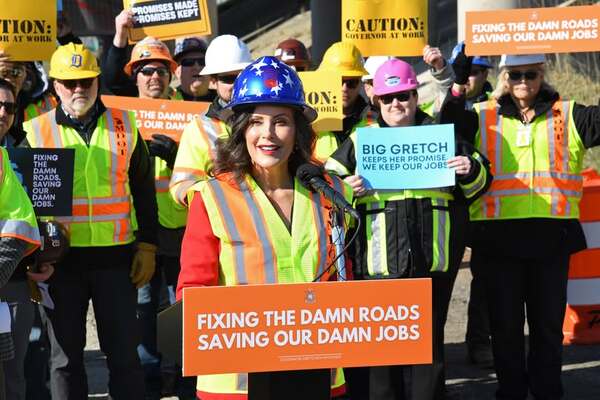
Gov. Gretchen Whitmer on Wednesday joined officials from the Michigan Department of Transportation, the road construction industry, Operating Engineers 324 and Wayne County to officially kick off the 2026 road construction season.
“Before I took office, Michiganders were dealing with bad roads and high costs,” said Gov. Whitmer. “I ran in 2018 to fix the damn roads because that’s what I heard from people in all 83 counties across Michigan.”
Gov. Whitmer toured the M-14 project in Plymouth Township, a $143 million investment to rebuild and repair M-14/I-96 from Newburgh Road to Sheldon Road, including critical bridge work at the I-275 interchange.
According to a release, this project is supported by nearly $84 million made possible by Gov. Whitmer's Rebuilding Michigan program to rebuild the state highways and bridges that are critical to the state's economy and carry the most traffic. The investment strategy is aimed at fixes that result in longer useful lives and improve the condition of the state's infrastructure.
“Throughout the construction season, workers are going to be fixing roads all over the state,” said Whitmer. “I’m grateful for every mile you’ve fixed so far. These are dangerous jobs. So, drivers, when you hit the road this spring and summer, we ask that you slow down and pay attention. There’s Michiganders at work here.”
However, a large portion of road funding relies on revenue from a new wholesale tax on cannabis products, which is being challenged in two separate lawsuits filed by the state’s recreational marijuana industry.
The industry argues the tax violates a 2018 voter initiative because the Legislature did not adopt it with supermajorities, and that it exceeds the sales tax rate set in the Michigan Constitution.
"There’s nothing sustainable about the road funding plan,” said Rose Tantraphol, spokesperson for the Michigan Cannabis Industry Association. “It was established through an unconstitutional process and sets up a tax structure that is illegal. The road funding compromise singled out the cannabis industry and has already triggered business closures and job losses. Undercutting one industry isn't going to raise the revenue that the state hopes to raise."