




Congressman Barrett Introduces Bill to Wind Down Operations in Iran
May 7, 2026
Nik Rajkovic / news@whmi.com
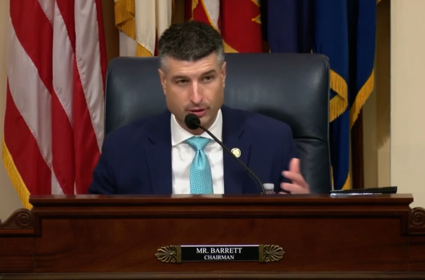
Congressman Tom Barrett on Thursday introduced legislation that would authorize military operations in Iran but limit their scope and impose a 90-day deadline to end the war, saying the president can't continue to wage war overseas without involving Congress.
"We can't have 20 year long endless wars in our country. We can't allow that to continue to happen. We can't do nation building in countries that don't share our values and don't share our worldview and don't see these intrinsic ideas of freedom, liberty and democracy and values the way that we do and we take for granted so much in America. We have to be very realistic about that," Barrett told WHMI Matt Hutchison.
The measure would authorize President Donald Trump for 90 days to use military force to demolish or degrade Iran's nuclear program, enforce a blockade of Iranian ports and allow for the safe passage of U.S. and allied ships through the Strait of Hormuz.
But it denies authorization for putting troops on the ground in Iran, nation-building, or occupying or holding territory within Iran, according to the text of Barrett's bill.
"So we have to prevent Iran from getting a nuclear weapon, but we can't engage in a 20 year long endless war. So the effort that I introduced today has very clear boundary lines and objectives in place. Number one, it has a clear objective, deter or prevent Iran from developing a nuclear weapon or the means to deliver one. t allows for the engagement against Iranian forces in that effort, or their proxies, as we've seen that they do to, you know, send efforts, you know, to different non technically Iranian groups, but definitely proxies of the Iranian regime. Allows for the blockade to continue, which I think has been a good leverage point over the Iranians. This blockade that has been in effect, Hormuz, and it allows for the reopening of the Strait of Hormuz, to use force as necessary to effectuate the the reopening of the Straits of Hormuz, but it does not allow the use of ground troops. It does not allow nation building. It doesn't allow the Americans to go in and seize land or gain ground in Iran," Barrett added.
The legislation comes after Trump on May 1 hit a key milestone in the Iran war under the 1973 War Powers Resolution that limits the administration's use of force without authorization from Congress. That statute provides a 60-day clock for the president to end the use of force unless Congress has declared war or authorized the use of military force. That 60-day clock expired on May 1 in Iran.
The 90-day authorization set forth under Barrett's bill would sunset July 30, backdating the start to May 1. It also provides for a limited, 30-day "wind-down" period to end deployment or military engagement.
"They're trying to claim that, you know, this initial 60 day window that they ended that mission and started a new one. I don't accept that, frankly, because you know, the same effort is underway today as it was two weeks ago. Before that 60 day limit had been encountered. I would love if you know we could have done this in a clean way, to roll from one or provide congressional authorization or have some guardrails put in place. You know, I think every president, not just President Trump, has rejected elements of the War Powers Act or tried to claim that they were not bound by certain elements of that. Probably nearly every single president since Richard Nixon has tried to claim."
Trump has said he does not need to seek approval from Congress for the Iran war and pointed to previous presidents having done the same with prior conflicts.
"Let me just tell you, on the war powers, so many presidents, as you know, have gone and exceeded it," Trump said on May 1 at the White House. "It's never been used. It's never been adhered to. And every other president considered it totally unconstitutional. And we agree with that."
Earlier this year, Barrett voted against three war powers resolutions that sought to end Trump’s military actions against Iran. Asked Thursday if he'd continue to do so, Barrett said he'd consider each vote on its merits.
One of Barrett's would-be Democratic challengers in November, Matt Maasdam of Ann Arbor Township, criticized Barrett on Thursday for those three war powers votes, saying Barrett gave Trump a "blank check" in Iran and that his new bill would give him another 90 days to "wage his war of choice," leading to four more months "of a war that Americans don't want."
"You don't commit American Lives without a mission, a strategy, a plan or an exit," Maasdam, a former Navy SEAL, said in a statement. "Barrett is reckless ― now our service members are paying the price and Michiganders are paying over $5 a gallon at the pump."
Another Democrat running in Barrett's district, former ambassador to Ukraine Bridget Brink of Lansing, said voters in mid-Michigan are frustrated that Barrett isn't standing up to Trump.
"Barrett's votes and positions supporting Trump's war of choice in Iran, which caused skyrocketing gas prices for families already struggling and the tragic deaths of American servicemembers, is just more of the same," Brink said.
More information on Barrett's bill is linked below.