




Brighton Area Schools Leaders Make Case for $156.3M Bond, While Former Board Members Question Timing and Cost
April 8, 2026
Matthew Hutchison / news@whmi.com
Brighton Area Schools leaders said a $156,285,000 bond proposal on the May 5 ballot would help the district maintain facilities, address security and traffic issues, expand instructional and program space and continue investing in technology across all grade levels.
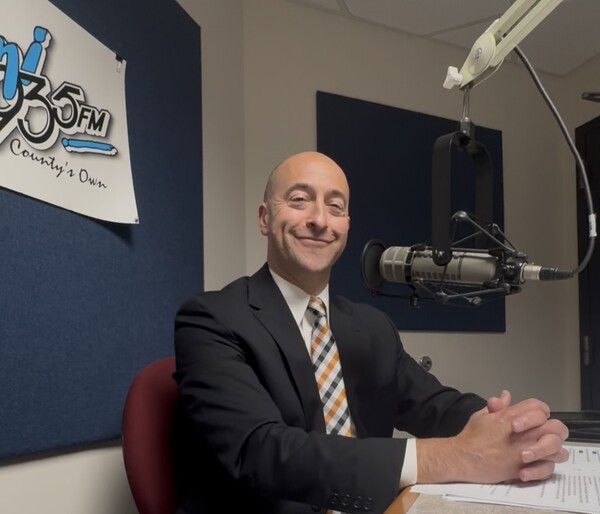
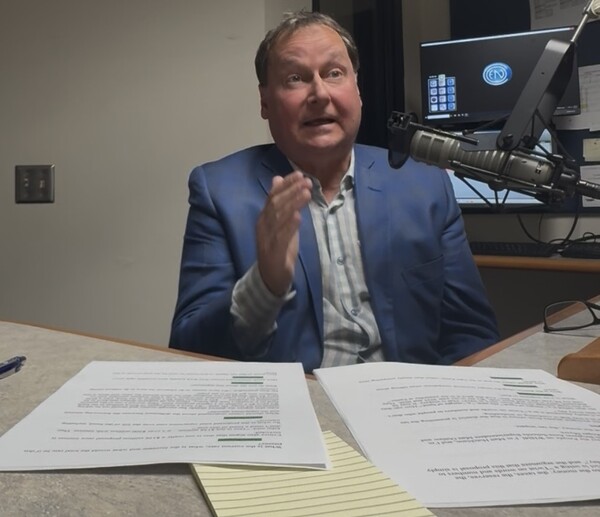
Speaking on WHMI’s “Meet the People” podcast, Brighton Schools Superintendent Matt Outlaw and Board President Roger Myers said the bond proposal grew out of years of planning that continued after the district’s most recent bond proposal, which voters approved in 2019.
“We constantly monitor our facilities, our operations,” Myers said, adding that the board, administration and consultants reviewed infrastructure, safety and programming needs over time to shape the package now before voters.
The proposal calls for a new access road behind Maltby Intermediate and Hornung Elementary to alleviate congestion at the intersection of Brighton and Bauer roads, as well as other access improvements at Hilton and Spencer elementary schools; significant security upgrades districtwide, along with new security vestibules at Hornung and Spencer; improvements to the science room at Brighton High School and enhanced performing arts space at the Brighton Center for Performing Arts; new classrooms, offices and parent-teacher meeting rooms across the district, including a new after-school space for latchkey children at Hornung; and a central kitchen intended to serve schools districtwide while eliminating the need for duplicate kitchens. The district has said meals would continue to be prepared from scratch.
Outlaw said the proposed improvements reflect the district’s reputation, which he said is rooted in “commitment to excellence from everyone, starting with the students and the staff and our parents.”
“Our secret sauce in this district is that everyone rolls up their sleeves and gets to work,” said Outlaw, who described himself as a “proud Brighton graduate.” “We have hard working, dedicated students, but our staff is absolutely fabulous. We have great principals. The other part that's a real secret here in Brighton is that our parents are awesome. They're very committed, very dedicated to raising their children, and they're great partners with us with education.”
He described the current school year as “an unbelievable year” for the district.
“We're seeing forward movement in all of our levels,” Outlaw said. “Our elementary schools are doing fabulous. Our intermediate school is doing outstanding. Our middle school is doing extremely well, and our high school is one of the best high schools in the country. So the throughline is excellence all the way through (K-12).”
He also pointed to the district’s emphasis on expanded extracurricular activities, new courses and early childhood literacy.
“Early childhood literacy is the foundation of everything,” Outlaw said. “So if we do well in that area, we’re going to see the fruits of that labor in many areas to come.”
Looking ahead, he said there will be an emphasis on “getting back to basics” in an age increasingly defined by artificial intelligence and other emerging technologies.
“Our students have to be aware of those things and have to be proficient in those, but I think the emerging trend is going to be the counter to some of those things,” Outlaw said, citing the “fundamentals” of education such as the Socratic method of questions and answers, reading from a book rather than an iPad or Kindle and disconnecting from technology to foster in-person discussions with classmates. “Things that we did 100 years ago, those are some of the things that are absolutely essential for brain development and for the preparation of our students.”
Myers said the bond proposal would help Brighton Area Schools continue offering the kind of programming and facilities that draw families to the district, including students from outside district boundaries.
He also addressed concerns that the millage rate would increase by 1.08 mills.
“If approved, the millage rate would then be at 4 mills,” Myers said. “It would be the lowest that the Brighton Area Schools has had, at least since 1987 – as far back as we could find the records. In the past 40 years, the millage rate was between five all the way as high as over seven mills, up until this very past year, when it went down to 2.92 mills.”
The proposal has also drawn criticism from former Brighton school board members John Conely and Bill Trombley, who have questioned its size, timing and presentation to voters. Trombley served as vice president and later treasurer of the Board and was the two-time bond chairman for the 2012 and 2019 bond proposals, both of which successfully passed, while Conely also served as treasurer and finance committee chair during his time on the board.
Their concerns, raised publicly and addressed during the interview, include whether the district should have waited until November, whether the public has been given enough detail about where money would go and whether existing district reserves could cover more of the work without asking voters for additional tax support.
Asked why the district is bringing the request now, Outlaw said Brighton leaders view the measure as part of the district’s normal capital cycle.
“This is the primary way that bonds are funded in the state of Michigan,” Outlaw said, noting that Brighton has had 11 successful bonds since 1964 and that seven years have passed since the last one.
On the question of why the measure is on the May ballot rather than in November, Myers said the board had considered moving earlier but waited to continue its review. He said that included further work with the Livingston County Road Commission on the proposed access changes at Maltby Intermediate and Hornung Elementary.
“We wanted to do our due diligence,” Myers said, later adding that the district believed it had a better overall package to present after taking more time. “We could have rushed the process and put it on the ballot when we were still at over seven and saw it as a millage rate that when it dropped from seven would only drop to four, as opposed to dropping to 2.92 and then raising it back to four. And that might have been an easier sales pitch to the resident.”
Myers continued: “But again, we wanted to do our due diligence. We wanted to make sure that what we were proposing to our community to support was the right size address, the right projects, and if it meant allowing that millage rate to drop to 2.92 and then asking for a partial restoration, we were fine with that.”
Trombley, by contrast, has said the district should have waited until November rather than pay for a special election and has tied his opposition in part to leadership at the top of the board.
Myers responded that the proposal is not about any one individual and emphasized that it was approved unanimously.
“This isn't a Roger Myers bond,” Myers said. “This is a bond that was voted on unanimously by all seven board members.”
Myers also said he hoped voters would focus on “what’s best for our students and what’s best for the safety and security of all of the people that come into our building every day.”
The timing issue may matter politically because May elections typically draw less participation than November general elections.
Official Livingston County results show the county’s May 2025 special election for a Dexter Community Schools bond proposition drew slightly more than 25 percent turnout in the affected jurisdictions. The Michigan Department of State also notes that local election data are maintained at the county level, while turnout in higher-profile general elections is typically much broader than in off-cycle local contests.
Myers, however, said he does not accept the premise that a May electorate is necessarily less informed.
“I think there’s a false premise built into that argument about the fact that people who are voting in May are less informed than they are, or maybe have less access than if it had been in November,” he said, pointing to rising absentee voting and project costs that only would have increased throughout the year as reasons the district chose not to wait longer.
District leaders also addressed criticism from Trombley and Conely that the public has not been given enough information.
Myers said Brighton Area Schools has focused on web materials, public sessions and other communication rather than sign-heavy campaigning. “Signs don’t necessarily equate to votes,” he said. Outlaw said the district has held “25 to 30 different question answer informational sessions with varying groups,” has more planned and has sent mailers across the community.
Myers said the district also created a “fact or fiction” section on its website after seeing what he described as “false claims” from opponents.
“We began seeing in social media signs that there was information being disseminated by the no group that was just blatantly false,” he said.
As one example, Myers said one early publication claimed that a “no” vote would reduce taxes by 4 mills, which he said was inaccurate because the district’s debt millage had already fallen to 2.92 mills and the proposal would raise it by 1.08 mills to 4.0.
Conely and Trombley have also argued that the district should be more precise about where the money would go and whether current district funds could cover more of the work.
Myers responded that the district’s website already provides a breakdown by building and project category and said the current proposal is “more detailed with greater specificity and greater transparency” than the 2019 bond package.
When asked what happens if the proposal does not pass, Myers said: “We will necessarily need to cut back on programming on extracurriculars that are offered,” he said, noting that the district would otherwise have to rely more heavily on operating dollars to handle major facility needs. Using operational funds would limit Brighton’s ability to continue offering the breadth of programming it now provides, Myers said.
Asked what he would say to voters still on the fence, Outlaw cast the proposal as an investment in where Brighton wants to be several years from now.
“In 2019 people invested in today,” he said. “2026 this bond is about the next seven years. Where do we want the schools to be in 2032, 2033? That’s what this investment is about today.”
Myers echoed that point, saying the district’s financial stewardship is one reason the board is now seeking 1.08 mills rather than a return to older debt levels.
Voters will decide the proposal on May 5.
You can hear my full discussion with Brighton Area Schools Superintendent Matt Outlaw and Board President Roger Myers on the podcast page of WHMI.com at the link below.