




Sheriff Murphy: Removal of License Plate Readers "Not Permanent"
September 1, 2026
Nik Rajkovic / news@whmi.com
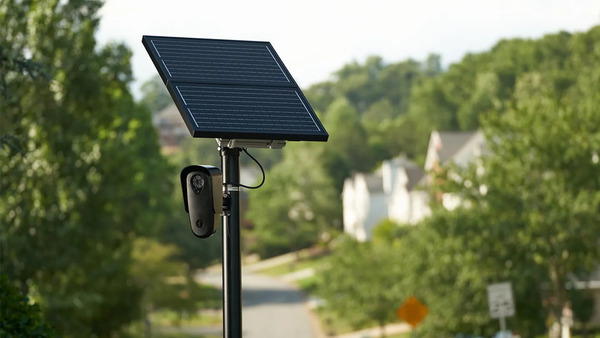
Livingston County Sheriff Mike Murphy confirms reports his office has been removing automated license plate readers, commonly referred to as Flock cameras, the nation's largest distributor, but insists the move is not permanent.
The cameras have been removed, he says, due to vandalism of the devices over the past few weeks.
"Because of repeated vandalism, we have removed our LPR's temporarily until we can determine the best way of catching the vandals," he said in a statement to WHMI News. "We are by no means acquiescing to the vandals to the extent that this will be permanent."
Communities across southeast Michigan continue to report damage to the devices, in response to privacy and other concerns.
Livingston County has used them 2019, and the sheriff has credited them with helping solve homicides, robberies and recover stolen vehicles.
Meanwhile, there's growing opposition to using the cameras, with some online groups urging citizens to flood their municipal meetings in an effort to remove them entirely.
State Rep. Jason Woolford (R-Howell) shares those same concerns, adding he is against the idea of Big Brother watching citizens.
He reminds constituents he's already sponsored a law signed by the governor, to rein in how the data being collected is being used.
"That bill says these cameras cannot be used for the issuing tickets, and specifically, cannot put points on your record," he told WHMI News. "There is much more work to be done there, but that's where we're starting."
"Obviously, we want to be able to use these for the right reason, but also, I personally believe this is a major overreach. I don't think we need these cameras."
Currently, there's legislation introduced in the Michigan House that would require police to obtain a warrant to use the data. Law enforcement agencies argue the cameras help find stolen vehicles and even kidnap victims in some cases, but have shown a willingness toward further regulation.
In August, Flock Safety announced an overhaul to its privacy and security measures amid growing backlash from consumers and reports of law enforcement abuse.
Flock reduced its standard data retention window from 30 days to seven. Previously, all data captured by one of the company's more than 119,000 cameras nationwide was deleted after the 30-day window. Now, that data will only live on Flock servers for one week.
Another privacy protection the company announced will be the ability for agencies to decide which types of criminal offenses they want to share data about with other municipalities.
"For example, City A could allow City B to search its cameras for a stolen vehicle or violent crime while blocking searches related to immigration enforcement," the company said.
A recently released framework called Audit Assistance flags abnormal search behavior. Previously, the feature was optional, with Flock reporting that a third of agencies turned it on. Now, the company says "Flock is making it standard for every law enforcement customer. When a system detects abnormal activity, the user is locked out in real time until an administrator reviews the searches. Flock is moving to more proactively address and root out misuse of technology."
Flock will also require a reason for every search going forward.
In July 2025, the company introduced an optional case code requirement. The new reform makes the case code mandatory for searches, though there will be an override for "genuine emergencies" such as missing children, the company said.
"A search without a reason is a search that shouldn’t happen in the first place, and now Flock’s system automatically treats it that way," Flock told FOX Business.
Despite the public backlash, Flock highlighted the company's success in helping to locate missing people, saying that in the 1 million investigations that Flock's technology was involved in last year, roughly 10,000 missing people were located.
Photo courtesy of Flock Safety.