




Governor Whitmer Signs Eighth & Final Balanced, Bi-Partisan Budget
July 21, 2026
Jessica Mathews / news@whmi.com
Release:
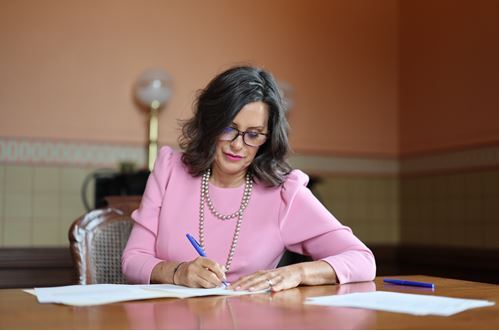
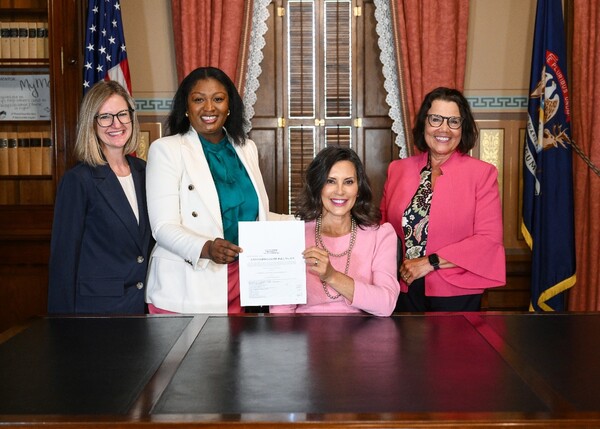
Today, Governor Whitmer signed her eighth balanced, bi-partisan budget into law. The fiscal year 2027 (FY27) budget lowers costs, grows opportunity for Michiganders, protects access to health care, fixes the damn roads, and supports small businesses, making our state the best place to live, work, and raise a family.
“At a time when Michiganders are struggling with higher costs, this budget puts money in their pockets,” said Gov. Whitmer. “It continues free breakfast and lunch for all 1.4 million public school students, cuts taxes, fixes the damn roads, and protects Michiganders from the harms of HR 1, DC Republicans’ big ugly bill. It invests in workers, students, and small businesses on main streets across our state. I’m proud of our work over the last seven-and-a-half years to grow Michigan’s economy, from creating tens of thousands of jobs to historic investments in communities and people. Let’s keep building on that progress and helping more families ‘make it’ in Michigan.”
“While each budget cycle during my time as majority leader has posed its own set of unique circumstances and challenges, Senate Democrats have remained dedicated to the same priorities since day one: delivering opportunity, equity, and real relief for the hardworking people of Michigan,” said Senate Majority Leader Winnie Brinks (D-Grand Rapids). “This budget is a continuation of our unwavering commitment to those core values — from protecting access to food benefits and quality healthcare to investing in affordable housing, safe drinking water, and reliable childcare. Together, we’ve proven that no matter what we’re up against, we will stop at nothing to give our constituents and communities the support they need and deserve.”
"We delivered a budget last year that included historic new transparency, rooted out thousands of ghost employees, spent less than the year before, and eliminated billions in waste, fraud and abuse. Now this year we’ve done it again," said Michigan Republican House Speaker Matt Hall. "This budget deal moves even more money out of wasteful spending and into the real priorities of Michigan families, like road repairs, schools, and public safety. This plan delivers better value for Michigan’s taxpayers, and I’m glad we were able to get it done together."
"At a time when costs continue to rise and federal economic failures jeopardize livelihoods and stability for people across the country, here Democrats are fighting to protect the programs and services that mean the most to everyday Michiganders," said House Democratic Leader Ranjeev Puri. "We want Michigan to be a place inviting for families and businesses alike, and that starts with lowering costs, affordable healthcare, and world-class schools. We fought for all 3 in this budget, and to thanks the partnership of Democratic Leadership, we were able to secure them."
“While politicians in Washington have stoked fear, chaos, and uncertainty across the state and nation, here in Michigan we’ve worked across the aisle to deliver a budget that provides residents with financial relief, stability, and peace of mind,” said Senate Appropriations Chairwoman, state Sen. Sarah Anthony (D-Lansing). “As the Senate’s lead budget negotiator, I’m incredibly proud to have championed a fourth state budget that responds to the pressing challenges that people and communities are facing across the state. From protecting crucial healthcare and food benefits and tackling our housing and childcare challenges to continuing to invest in programs that make a real difference for real people, our 2027 state budget is a promise to the people of Michigan — we've got your back.”
“Good budgeting is about setting priorities and making responsible choices, said House Appropriation Chairwoman state Rep. Ann Bollin. “Our bipartisan budget protects essential services and invests more in priorities like public safety and saving Medicaid while reducing overall spending, maintaining healthy reserves, and advancing reforms that make government more effective and accountable. It demonstrates that we can meet Michigan’s needs while remaining respectful of taxpayers.”
Saving Michiganders Money
The budget will lower costs and put money back in people’s pockets, including:
• $200 million to continue free school meals for all 1.4 million public school students, saving families around $1,000 per year, per child, and valuable time every morning.
• Continuing the Working Families Tax Credit, sending an average of nearly $3,900 in tax relief to 665,000 families.
• Rolling back the retirement tax completely, saving 500,000 seniors an average of $1,000 a year.
• Continuing tax exemptions on:
• Tips (saving 300,000 workers $400 a year),
• Overtime (saving 500,000 workers $500 a year),
• Social Security (saving 40,000 seniors $500 a year)
• $532 million, and more than $1.7 billion to date, for the Michigan Achievement Scholarship, which provides a tuition free pathway for full-time community college students through the Community College Guarantee, and up to $27,500 for full-time students at public or private 4-year universities. Since Governor Whitmer took office, state scholarship investment has increased by 512%. Last school year, nearly 90,000 students from all 83 counties received a Michigan Achievement Scholarship.
• $25 million to support expanding Michigan Reconnect to adult learners ages 21 and older, giving adult learners a tuition-free pathway to earn an associate degree or skills certificate. More than 66,500 students have enrolled in community college with Michigan Reconnect since it was created in 2021. The governor called for expanding Michigan Reconnect to 21 in her 2026 Detroit Auto Show speech.
Protecting Access to Medicaid
With this budget, Michigan is leading the nation with one of the most comprehensive responses to DC Republicans’ historic attacks on Medicaid. This budget builds on last year’s budget, which protected $2.7 billion of core Medicaid services statewide. The budget continues to fund whole-of-government initiatives to protect access to health care and ensure the future sustainability of Medicaid, lower costs for Michiganders, and helping them protect their benefits.
Mitigating Impact of H.R. 1
• $184.3 million to prepare our state to meet new, burdensome federal requirements that make it harder to access food and health care:
• $94.3 million in increased SNAP administrative cost-sharing, which increased from 50% to 75%
• $15 million to ensure accountability and transparency in SNAP administration, protecting Michiganders from federal attacks on SNAP.
• $40 million for staffing, administration, and implementation of HR1 to work with beneficiaries to protect benefits and navigate federal requirements.
• $20 million for community health navigators to help individuals who are subject to new eligibility requirements demonstrate compliance and maintain coverage.
• $28 million for Michigan Works Agencies who are handling increased referrals of Medicaid and SNAP recipients subject to work requirements.
• $4 million for registered apprenticeships to support individuals seeking job training and employment opportunities.
Creating Jobs & Growing the Economy
The budget makes investments to create good-paying jobs, continue to grow and diversify Michigan’s economy, and build stronger, more vibrant communities, including:
Growing Our Economy
• $68.5 million in funding for Michigan small business, community growth, and entrepreneurship to support small business, grow Michigan’s economy and strengthen our entrepreneurial and innovation ecosystem.
• $152.2 million in continued support for Michigan Rehabilitation Services, to help individuals with disabilities prepare for, obtain, and maintain employment. Since 2019, Michigan Rehabilitation Services has supported more than 105,000 individuals with disabilities in securing or retaining employment.
• $15.9 million to support Michigan science, technology, engineering, and mathematics (MiSTEM) programs which will increase the number of students who are college- and career-ready upon high school graduation and promote degree attainment in STEM fields.
• $14.5 million for Going Pro to help Michigan employers train and retain workers, offering on-the-job experience, apprenticeships, and classroom instruction that lead to industry-recognized credentials.
• $9 million in continued funding for the Pure Michigan campaign, which fuels tourism, supports local businesses, and strengthens Michigan’s economy. The Pure Michigan campaign has generated an estimated $9.9 billion in ad-influenced visitor spending across the state since 2019.
• $3.5 million to grow the maritime manufacturing sector and strengthen the state’s defense industry, creating good-paying jobs, fostering innovation, and attracting new investment.
• $3.5 million to support the Michigan Office of Defense and Aerospace Innovation, advancing programs that foster innovation, create jobs, and grow Michigan’s defense and aerospace industries.
• $1 million investment supporting the Office of Future Mobility and Electrification, advancing aviation and drone initiatives that drive innovation, economic growth, and workforce development.
Fixing the Damn Roads
The budget continues to fix the damn state and local roads across Michigan. This budget includes:
• $343 million more for local road funding, for a total of $3.1 billion in road funding, the beginning of investments from the historic $2 billion roads plan that Governor Whitmer signed into law last fall. The road funding will save drivers time behind the wheel and money on car repairs while also supporting an estimated 30,500 good-paying construction jobs every year.
• $52.7 million in additional funds for state and local roads and bridges.
• A $123.8 million increase in state and federal support for transit and rail programs.