




Sheriff Murphy Frames Senate Bid Around Local Control, Civility
February 9, 2026
Matthew Hutchison / news@whmi.com
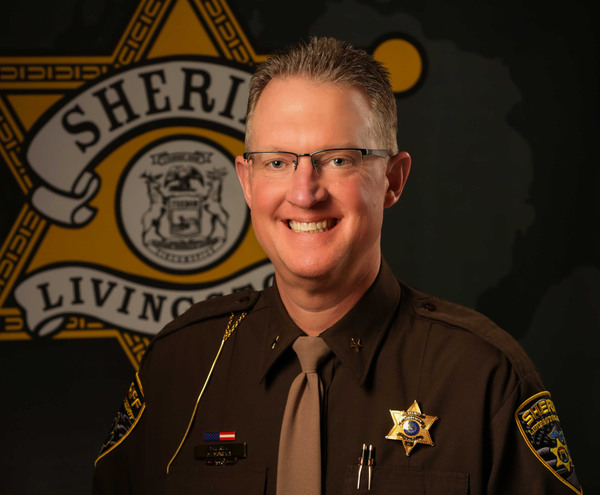
Livingston County Sheriff Mike Murphy says his run for Michigan Senate is rooted less in ambition than in frustration with partisan gridlock in Lansing, with state decisions that override local voices, and a culture he believes has grown angrier and less civil.
“I’m not looking for another office,” said Murphy, who appeared on WHMI’s “Meet the People” podcast for his first in-depth media interview since announcing his candidacy. “I’m just looking to go up there and breathe a little common sense” into Lansing.
The interview with Murphy is the first in a series of hour-long interviews WHMI is conducting with candidates running for local, state and federal office. WHMI will be speaking with Murphy’s Democratic opponent, Green Oak businessman Rob Hower, in the coming weeks, as well as former Detroit Mayor Mike Duggan, who is running for Governor.
Local Control at the Center
During the discussion this week, Sheriff Murphy repeatedly returned to a single theme: decisions should be made as close to home as possible.
“Decisions need to be made at the lowest (governmental) level,” he said. “Your townships need to be able to make decisions. The county needs to be able to make decisions. The state does not have all the answers.”
That view shaped his stance on one of Livingston County’s most divisive issues — a large-scale data center project on the 1,000-acre Van Gilder farm in Howell Township. While many residents fought the proposed project, Murphy said he would have supported it if he had been on the Board.
“In my opinion, that property was ripe for a data center,” he said, noting that by the time the developer withdrew its application, concerns over setbacks, noise, energy and water use had largely been addressed. “At some point, if you are an elected official, you have to have backbone and do the right thing.”
Murphy likened data centers to other projects such as airports, jails, hospitals and schools. “People want those conveniences, but they don’t want them in their backyard,” he said.
While Murphy described himself as “very much a property rights guy,” he acknowledged limits.
“There needs to be regulation. You can’t take 30 acres of wetland and pour concrete over it — that obviously makes sense,” he said. “But by the same token, it can’t be so restrictive to nix somebody’s property rights.”
Tracking Immigration Status
Murphy said he agreed with the Livingston County Board of Commissioners’ September 2024 8-0 approval of a resolution, allowing his agency to document contact with people without legal status and share that information with ICE.
Murphy characterized the policy as basic record-keeping.
“I was getting calls frequently with questions, ‘How many contacts do you have with illegal citizens?’ And my answer was, ‘I don’t know,’” he said.
Since January 2025, he said his department and other local agencies have recorded contact with 24 individuals in the county without legal status. Apart from state police, all law enforcement agencies in the county are on one record management system, he said, stressing that the information is kept “in house.”
“That information is ours for our statistics,” said Murphy, who also described under what circumstances they share the information with ICE. “Where the share comes in, though, is when we find out, whether it’s through an arrest or whether through contact, that somebody’s here illegally. We’ve got a hotline to ICE where we can say, ‘Hey, we think this Mike Murphy character is from Ireland here illegally, can you verify that?’ and they will say ‘yay’ or ‘nay’ and then we proceed from there.”
A Bleak View Of Social Media
The self-described blunt-talking Murphy reserved his sharpest words for what he called the collapse of civil discourse. He linked rising hostility — and increases in domestic violence — to an online culture that intensified during the COVID-19 isolation and has not abated.
“There’s no question incivility is on the rise, has risen and will continue to rise,” he said, citing “keyboard testosterone” as a driving force behind confrontations at public meetings and domestic abuse cases that are increasingly becoming more violent.
“Social media is the devil’s tool,” he said.
Because of the climate, the Sheriff’s Office uses its platforms only as a one-way channel. “I’m not going to engage folks,” Murphy said.
Economy, Schools, and Safety
Murphy graded Michigan’s economy a “B,” saying families are “doing okay” but feeling the squeeze at the grocery store. He supports easing regulations to spur homebuilding in a county where prices have soared, saying it costs would-be homebuilders as much as $100,000 before any shovels hit the dirt.
On education, he focused on safety and relationships between deputies and students.
Livingston County’s school districts score well above the state’s struggling third-grade reading rates, and Murphy said that Michigan should draw lessons from other states like Mississippi, which The New York Times last month noted “has gone from 49th in the country on national tests in 2013 to a top 10 state for fourth graders learning to read.”
Murphy also cited his agency’s cooperation with the Livingston Educational Service Agency and area superintendents to address reading scores and truancy, and he pointed to his department’s expansion of school resource officers during his time as sheriff. He said those interactions help students see officers as “human” and vested in their success.
Murphy said he often loses sleep over how to prevent school violence, including potential shootings. He pointed to ongoing planning exercises with area school and other safety officials to ensure they are undertaking all preventative measures.
Livingston County, he noted, consistently ranks as one of the top 5 safest counties in Michigan, despite ongoing population growth and declining law enforcement personnel. He cited ongoing inter-agency cooperation and robust planning for keeping the county safe.
“There’s no other county in this state that works as well as we do in public safety,” he said, pointing to regular coordination among police, fire, EMS and emergency management.
Consensus Building
Murphy positioned himself as a reluctant candidate and insisted the Senate bid was not part of a grand plan.
“This was never really part of the plan,” he said. “My plan was to run one more term as sheriff and then ride off into the sunset as the longest-serving sheriff in the history of Livingston County.”
Supporters approached him and floated runs for governor and U.S. Senate — ideas he rejected outright.
“Hard pass. There’s no way I’m going to D.C.,” he said. “That’s politics on a whole other level.”
And while he noted that he believes he can be effective in Lansing, he also pushed back on the characterization that the Senate role is a “higher office” than that of Sheriff.
“I’ve got the best gig in the world,” Murphy said. “Right now I’m one of one. I direct my people to do the job that they do, and nobody else does that. A state senator doesn’t do that. The county commissioner doesn’t tell me how to do my job, and nor does anybody else. I answer to the people. My report card comes in every four years.”
If elected, Murphy said he would be a consensus builder and reach across aisles.
“I feel that as strong as I am in my convictions on certain things, I’m a very approachable guy,” he said. “I think I’m one of those people who can relate to both sides of an argument.”
He pointed to a broken discourse that disincentivizes cooperation between the parties.
“Either side could come up with the cure for cancer (or) the cure for world peace – you name it. And the other side would submarine it because it wasn’t their idea – and that’s broken,” he said. “I’m just looking to go up there and breathe a little common sense and have these conversations with folks to get them back to realize, ‘Hey, listen. We need to represent the people that put us here’.”
He added that if he were elected, he would like Undersheriff Jason Pless to succeed him. If not, Murphy said he will seek re-election as sheriff.
Experiences That Shaped Him
Murphy said his approach to the badge was forged long before he wore one. As a youth he had one positive and one deeply negative encounter with police — the latter when his father remarried and later killed his wife and himself.
“The department that handled that did an extremely poor job,” he said. The contrast, he added, showed him how profoundly an officer’s empathy can affect a family. “I wanted to be in a position to have a positive impact on youth.”
Throughout the interview, Murphy praised the residents of Livingston County for their support of law enforcement in general and his deputies in particular. He characterized the region as great for raising a family.
Makes The Case
Murphy, who has led the department for a decade after serving ten years as undersheriff, said voters already know what they’re getting.
“I’m a proven quantity. I am what I am,” he said, underscoring that he will remain vigilant and accessible to the public throughout his term. “I’m not going to be that politician who shows up at election time and says, ‘Hey, remember me, vote for me.’”
Murphy faces Democrat Rob Hower of Green Oak in the November race for the 22nd Senate District seat being vacated by term-limited Sen. Lana Theis.
Matt's entire interview with Sheriff Murphy is linked below.